
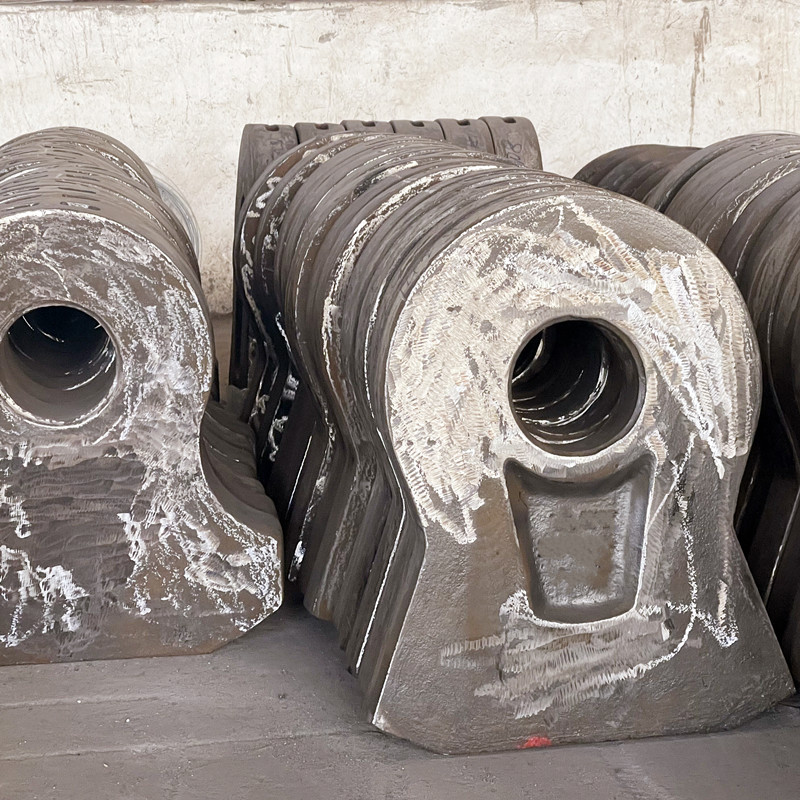
In the ever-evolving field of industrial machinery and heavy equipment, the demand for durable, high-performance components remains paramount. One critical component that significantly influences the efficiency and reliability of machinery is the angular bearing. Angular bearings play an essential role in managing combined radial and axial loads, which are crucial in various mechanical applications, from automotive systems to large-scale manufacturing plants. Today, advancements in materials science and engineering have paved the way for angular bearings with unprecedented durability and lifespan, offering industries more reliable solutions to optimize their operations.
At the forefront of this technological advancement is WUJING MACHINE, a company renowned for its comprehensive range of high-quality steel and specialized alloys. WUJING MACHINE provides an extensive selection of standard manganese steel, high-chromium iron, alloy steel, and carbon steel, alongside tailor-made wear-resistant solutions such as titanium carbide (TiC), ceramic, and chromium-inserted alloys. These materials are designed to significantly enhance the performance and durability of components like angular bearings, which are often exposed to intensive mechanical stress and adverse operating conditions.
**The Importance of Angular Bearings in Industry**
Angular bearings are designed to accommodate combined axial and radial loads, making them indispensable in applications where space constraints demand components capable of handling multiple force directions. They are widely used in automotive steering and wheel hubs, heavy machinery, industrial robots, and various rotating equipment. The efficiency and longevity of these bearings directly influence maintenance costs, machine reliability, and overall productivity.
However, due to the demanding conditions Angular bearings face—including high pressures, friction, and sometimes corrosive environments—their materials must not only be strong but also resistant to wear and deformation. Material failure in an angular bearing can lead to machinery downtime, costly repairs, and even catastrophic failure in critical applications.
**WUJING MACHINE’s Contribution: Advanced Material Solutions for Angular Bearings**
Recognizing the critical need for superior material durability, WUJING MACHINE has developed a portfolio of materials that meet and exceed industry standards for bearing performance. Their product lineup includes:
- **Standard Manganese Steel**: Known for its high impact strength and resistance to abrasion, manganese steel is a popular choice for components subjected to shock and stress. It has a unique ability to harden under impact, making it ideal for certain bearing components.
- **High-Chromium (Hi-Cr) Iron**: This material offers excellent hardness and wear resistance, making it suitable for parts exposed to severe service conditions. Hi-Cr iron alloys are less brittle than some ceramics, providing a balance of toughness and durability.
- **Alloy Steel and Carbon Steel**: These steels provide customizable mechanical properties through alloying and heat treatment processes. They are widely used for their strength and controllable resistance to wear and fatigue.
- **Tailor-Made Wearing Solutions**: For applications demanding even greater longevity and performance, WUJING MACHINE offers specially engineered materials such as TiC composites, ceramic elements, and chromium-inserted alloys. Titanium carbide (TiC) is famed for its exceptional hardness and resistance to wear, often utilized in cutting tools and abrasion-prone environments. Ceramic components provide superior hardness and corrosion resistance, essential for bearings operating in harsh chemical or high-temperature environments. Chromium-inserted alloys create hard surfaces while maintaining a tough base material to resist cracks and fractures.
By integrating these advanced materials into the manufacturing of angular bearings, WUJING MACHINE not only improves the mechanical performance of the bearings but also extends their operational life span, reducing maintenance needs and increasing machine uptime.
**Industry Impact and Future Outlook**
The collaboration of high-performance materials with precision engineering in angular bearing production represents a significant step forward for industries relying on heavy-duty rotary components. Machinery operators benefit from reduced downtime, lower part replacement frequency, and overall cost savings. Furthermore, enhanced bearing materials contribute to energy efficiency by minimizing frictional losses, supporting broader environmental sustainability goals.
WUJING MACHINE’s commitment to innovation and customization also allows clients across various industries to receive tailored solutions. Whether it is for automotive manufacturing, mining equipment, construction machinery, or robotics, the company’s expertise ensures that angular bearings can withstand specific operational challenges unique to each sector.
Looking ahead, continued research into material science and engineering techniques promises further enhancements in bearing technology. WUJING MACHINE remains dedicated to exploring new composite materials and coating technologies that can push the boundaries of wear resistance and mechanical strength even further.
**Conclusion**
Angular bearings are essential components requiring exceptional material quality to perform effectively under challenging conditions. WUJING MACHINE’s robust portfolio, featuring standard manganese steel, high-chromium iron, alloy and carbon steels, alongside cutting-edge TiC, ceramic, and chromium-inserted alloy solutions, represents a comprehensive approach to meeting these demands. Through these materials, angular bearings achieve longer service lives, improved resilience, and superior performance, enabling industries to operate more efficiently and reliably.
As industrial demands grow and machinery becomes increasingly sophisticated, the role of companies like WUJING MACHINE—delivering advanced materials and tailored wearing solutions—will become even more crucial in shaping the future of mechanical component manufacturing worldwide.